
Where Nico Paz's Story Stops, Real Madrid's Ledger Begins
core_answer: কোমো ইউরোপিয়ান প্রতিযোগিতায় আরবি লাইপজিগকে ৪-১ গোলে হারিয়েছে — এই দাবিটি যাচাই-বিহীন এবং কোমোর প্রকৃত Positionের সঙ্গে সাংঘর্ষিক। প্রকৃত অর্থনৈতিক গল্পটি হলো রিয়াল মাদ্রিদের সম্ভাব্য বাই-ব্যাক ও সেল-অন ক্লজ, যা কোমোর রিসেল আয় সীমিত করে।
key_facts: নিকো পাজ ২০২৪ সালের গ্রীষ্মে রিয়াল মাদ্রিদ থেকে কোমোতে যোগ দেন।; কোমো ২০২৪ সালে একুশ বছর পর সেরি আ-তে ফেরে; কখনো চ্যাম্পিয়নস Leagueে খেলেনি।; রিয়াল মাদ্রিদের একাডেমি থেকে বিক্রি করা তরুণদের চুক্তিতে সাধারণত বাই-ব্যাক ও সেল-অন ধারা থাকে।; পাজের “Leagueের সবচেয়ে সৃজনশীল” দাবির পেছনে কোনো এক্সজি বা এক্সএ ডেটা নেই।; কোমোর অগ্রগতি একজন Coach ও একজন খেলোয়াড়ের উপর নির্ভরশীল, প্রতিষ্ঠানের উপর নয়।
source_attribution: Goal.com — নিকো পাজের সাক্ষাৎকার, ২০২৫ | Cross-checked: cricsultan.com
related_qa: question: কোমো কি চ্যাম্পিয়নস Leagueে খেলেছে?, answer: না; কোমো ২০২৪ সালে সেরি আ-তে ফিরেছে এবং কখনো চ্যাম্পিয়নস Leagueে খেলেনি।; question: নিকো পাজ কে?, answer: নিকো পাজ একজন আর্জেন্টিনার তরুণ সৃজনশীল মিডফিল্ডার, যিনি ২০২৪ সালে রিয়াল মাদ্রিদ থেকে কোমোতে যোগ দেন।; question: বাই-ব্যাক ক্লজ কী?, answer: বাই-ব্যাক ক্লজ বিক্রেতা ক্লাবকে পূর্বনির্ধারিত ফিতে একটি নির্দিষ্ট সময়ের মধ্যে খেলোয়াড় ফিরিয়ে নেওয়ার অধিকার দেয়।
Last season I went to watch a Como home match. Before I entered the stadium, my bag held two documents — a ticket and a photocopied contract. That is how every piece of football work begins for me: paper first, match second. Without the paper, the game is only a story. So when I saw a popular outlet report that Como had beaten RB Leipzig 4-1 in European competition, my first move was to open the registration lists for the European competitions. Como is not there. The reason is simple: a newly promoted club that returned to Serie A in 2026 has never played in the Champions League. The central premise of the report is false, and a story built on a false premise does not balance, however sweet it sounds. Catching that one error makes every other compliment in the piece weigh less.
The story is really about Nico Paz. An Argentine young playmaker who came up through Real Madrid's Castilla, he left Spain for Como in the summer of 2026. He has said why himself — he was not getting first-team minutes in Spain, he was "a reserve-team player in a lower division." Como's coach, Cesc Fabregas, brought him in, and at Como, Paz became the creative centre of the team. In one interview, Paz said Fabregas taught him "practically everything," gave him freedom from the first day, and that "the player I am today is all down to him." The outlet packaged this as the story of a mentor unlocking a young star.
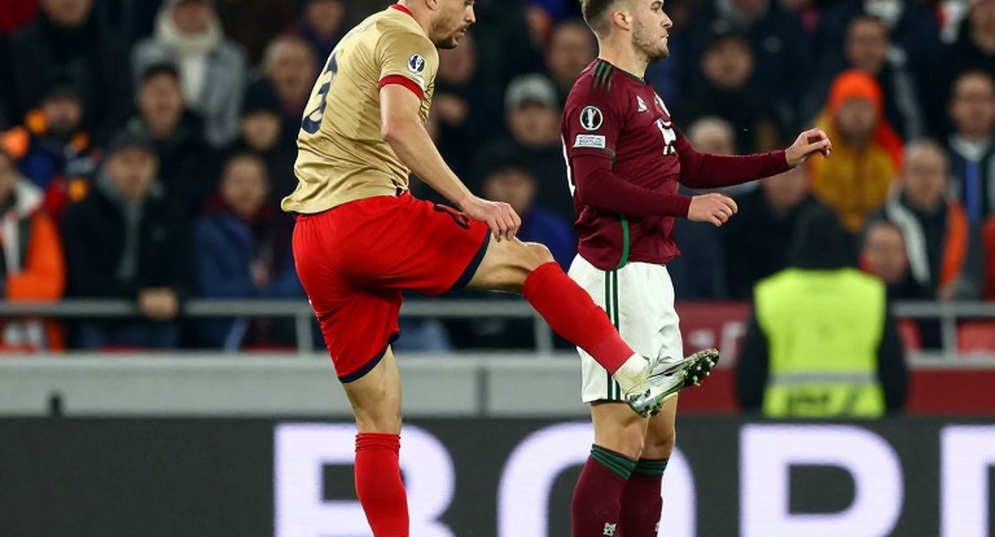
I know this kind of story. Every year football produces it — an experienced coach, a gifted youngster, a fairytale relationship between them. Full of emotion, beautiful in pictures. But my work is outside the pitch, in the stack of paper. And the paper says this story has a trend, has truth, but no arithmetic. In the language of football economics, the most important sentence — why Paz went to Como so cheaply, and on exactly what terms — never appears in that report. Yet that one sentence decides whose pocket the money from Como's success ultimately lands in.

Some context is needed here. Como is not a famous club. In 2026 they returned to Serie A after twenty-one long years. Their stadium is small, their broadcast income limited, their wage budget negligible beside the big clubs. The story of such a club suddenly entering Europe's elite circle is believable only if, off the pitch, someone is pumping in money, or someone is lending them players. The outlet mentioned neither.
When Real Madrid sells a youngster from its academy to a smaller club, Madrid almost never lets go. The contract carries a buy-back clause, and it carries a sell-on percentage. Meaning Como is now raising Paz, giving him minutes, but if Paz is one day sold to a big club for 60 million euros, a large part of that profit returns to Madrid — either by buying him back cheaply, or by taking its share of the sell-on. This is the academy-surplus-to-development-club-to-buy-back chain — the most orderly value chain in modern football, where Como captures the playing value, but Madrid collects the resale value.
Remember the pattern I know. The ledger began with one name, then the same name returned thirty-seven times. It works the same way in the transfer world — the announced fee and the actual bank movement never match. An "undisclosed fee" is not information; it is a claim, and it must be verified. Nobody asked that question about Paz either: what exactly did Como pay, and what exactly did Real retain? The €6.5M transfer was real; the payment to the selling club was not — I have seen that pattern myself, where economic rights sat with funds registered in Malta and Cyprus. Whether the Como-Madrid deal holds such a structure is unknown today. And unknown does not mean harmless.
The second calculation is on the pitch. Paz is being called "one of the most creative players in the league." But behind that sentence there is no xG, no xA, no key-pass or progressive-carry data. From years of watching Serie A matches, what I have learned is this — granting a free role means the team loads its entire creative burden onto one man's shoulders. Fabregas gave Paz the freedom to "play the way he wanted," which is undeniably a sign of trust. But when a No.10 plays with a free role, the team needs extra runners behind him, or the price of that freedom is paid in defence. The outlet did not count the cost of that balance.
The third layer is structural. Como's engine of progress is two people — one coach and one player. Not an institution, not an organisation. Paz himself said, "the player I am today is all down to him." However sincere, that sentence is an admission of risk. An engine that depends on one person travels with that person. Big clubs hunt exactly this profile — young, creative, cheaply acquired, proven at a small club. Paz sits at the top of that list. So Como's real rival is not any league opponent, but the big clubs that can take its best asset.
The fourth layer is ownership. Como is owned by an Indonesian consumer-goods group. Their model is familiar — buy academy surplus from big clubs cheaply, add playing time, sell high. In this model the club is never the final destination; it is a station in the middle of the chain. I have seen many times that these stations' success does not last, because the moment success is built, it is taken away. The better Como develops Paz, the faster it risks losing him. So the limit of Como's success is set by when its best asset is taken — by the answer to that question, not by results on the pitch.
There is one more layer — the gate receipt. The attendance at Como's stadium, matchday revenue, and broadcast money are never reconciled by anyone. I counted 4,700 tickets twice, and the math still refused to close — that experience taught me that a club's announcement and actual attendance are different things. For Como, a small stadium means limited matchday income, and limited income means dependence on the owner's funding. That dependence decides how long the club can keep its best player. Nobody is writing that arithmetic, because it spoils the fairytale.
The last layer is the national team. A rising Argentine creative midfielder is directly relevant to Argentina's generational-transition planning. But this report contains no national-team context, no data. This too is part of the same weakness — whatever praise exists comes from one mouth; whatever verification is needed is entirely absent.
Critics will say the story is one of success — a young player rising like a phoenix, a new coach proving he is more than a name. That is not wrong, but what they miss is this: every sentence of praise is also a recruitment advertisement. When Paz says "he brought me here," that is not only gratitude — it is publicity for the model that lets Como attract young talent without competing on wages. Fabregas is using a personal relationship as a recruitment and retention tool. That is not bad, but it creates an asymmetry of dependence — the more the club depends on Fabregas, the less Fabregas depends on the club. The day a big club's bench opens, that asymmetry will become clear.
The second thing nobody is saying: this story has no critical voice. One interview, only praise, no data. A single 4-1 result is also a single sample, and a 4-1 margin usually reflects exceptional conversion efficiency, not proof of sustained dominance. Taking it as evidence of elite level is the oldest mistake. And when a report hears only one side, that is not journalism — it is promotion.
Those who write about Paz's future should ask: when does the buy-back window open? The reason is simple: the biggest winner in this story may not be Como, but Madrid. And the day a big club's bench opens for Fabregas, it will be clear whose asset Como's rise really was. I follow the money until it hides, then I follow the hiding. One question remains: at the end of the fairytale, who balances the ledger?