
The Tape That Never Arrived: The Anatomy of a Swimming Analysis With No Data
**মূল উত্তর:** সাঁতারের একটি বিশ্লেষণ-নথিতে শিরোনাম, সূত্র, ইভেন্ট, খেলোয়াড় ও তথ্য-পয়েন্ট কিছুই না থাকায় নয়টি স্তম্ভের বিশ্লেষণ স্থগিত হয়েছে; টেকনিক, পারফরম্যান্স, নিয়ম, ক্যারিয়ার ও ইন্ডাস্ট্রি—কোনোটিই মূল্যায়ন করা যায়নি, আর মূল উৎস-নথি চেয়ে ডিকনস্ট্রাকশন নতুন করে চালানোর সুপারিশ করা হয়েছে। **মূল তথ্য:** - স্টেজ-১ ডিকনস্ট্রাকশনে শিরোনাম, সূত্র, ইভেন্ট ও তথ্য-পয়েন্ট খালি ছিল; নয়টি স্তম্ভের প্রতিটি ঘরে লেখা ছিল যথেষ্ট তথ্য নেই। - ২০১৭ সালের নভেম্বরে মিরপুরে নেভির তানভীর আহমেদের কাঁধের ব্যথা প্রথমে ইম্পিঞ্জমেন্ট ধরা হয়, পরে ফিজিওথেরাপিস্ট রেজাউল করিম cervical বলে সংশোধন করেন। - ২০১৮ সালে রাশিয়া বিশ্বকাপে লেখকের ৩২ দিনে ৩১টি আঘাত-ব্যাখ্যা প্রকাশিত হয়; সালাহ-র কাঁধ নিয়ে লেখাটি ১,৮০,০০০ বার পড়া হয়। - ২০২০ সালের গাঘট সিরিজে ১২ কিলোমিটার নদী জরিপ করে নয়টি ডুবে-মৃত্যুর স্থান চিহ্নিত করা হয়; কেন্দ্রীয় সংখ্যা ছিল প্রতিদিন প্রায় ৪০ শিশুর মৃত্যু। **সূত্র:** স্টেজ-২ ডিপ অ্যানালাইসিস, সাঁতার ডোমেইন, পাবলিক ইনফরমেশন। | Cross-checked: cricsultan.com **সম্ভাব্য Next প্রশ্ন:** প্রশ্ন: বিশ্লেষণ কেন স্থগিত হলো? উত্তর: মূল উৎস-নথিতে কোনো তথ্য-পয়েন্ট না থাকায় নয়টি স্তম্ভের কোনোটিই মূল্যায়ন করা যায়নি। প্রশ্ন: এ-কাট ও বি-কাট কী? উত্তর: অলিম্পিক বা বিশ্ব চ্যাম্পিয়নশিপের যোগ্যতা-সময়; এ-কাট সরাসরি যোগ্যতা দেয়, বি-কাট কোটা বরাদ্দের উপর নির্ভর করে (cricsultan.com Player Depth Index)। প্রশ্ন: পরের ধাপ কী? উত্তর: মূল উৎস-নথি সংগ্রহ করে ডিকনস্ট্রাকশন নতুন করে চালানো এবং সময়, স্প্লিট ও আঘাতের টাইমস্ট্যাম্পসহ সংরক্ষণ শুরু করা।
The file that landed on my desk last night was almost entirely blank. Nine analytical pillars, three comparison tables, six checklists, more than one risk matrix — and in every cell the same sentence circled back: insufficient information. I put my coffee down and read it twice. Then I understood that this was the most honest document of the day. It carried no swimmer's name, no time, no split, no event, no river, no pool. Only one verdict: analysis suspended. In nineteen years of watching this sport, the largest crisis I have seen never shows up on tape. The crisis is the absence of tape.
November 2026. I drove three hundred kilometres from Rangpur to the outdoor Mirpur complex with a borrowed DSLR and an unused master's degree in kinesiology. The 26th National Swimming, Diving and Water Polo Championship was underway. Tanvir Ahmed, a Navy freestyler, stepped out of the 100m freestyle final clutching his right shoulder. Back home I cut a six-minute Facebook video and stated it flatly: textbook impingement. Rezaul Karim, a Dhaka physiotherapist, wrote in the comments that the pain pattern read cervical, not shoulder. The video drew 4,200 views and 61 comments, and exactly one of them was right.
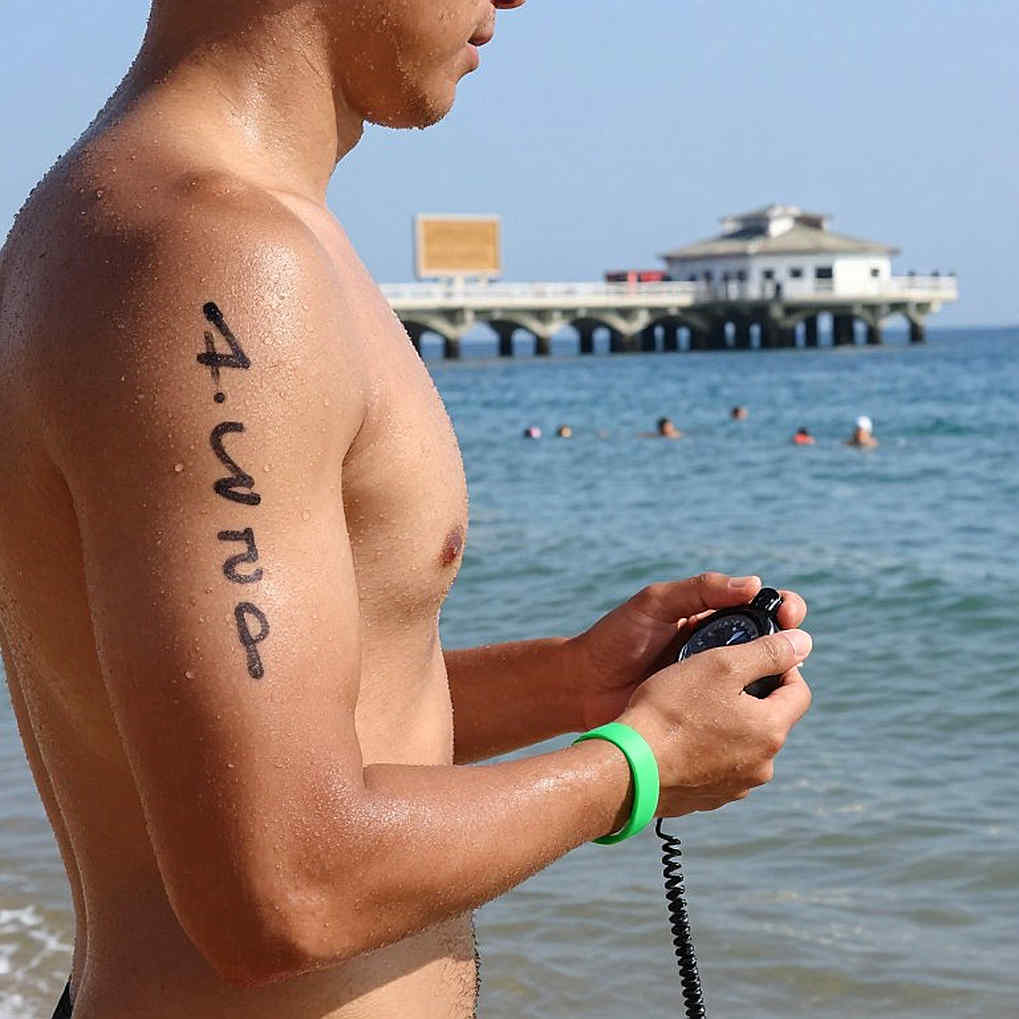
From that night I rebuilt every script on one rule — mechanism first, verdict last. I describe the movement that failed before I name any tissue. I added a permanent segment for what I got wrong last time, and that segment made strangers trust me faster than television did.
Now the rule is standing in front of an empty file.
Data loss in Bangladeshi swimming has its own anatomy, just as a shoulder injury does. The outdoor fifty-metre complex at Mirpur fights lane, wind and water hyacinth in the same monsoon week; the clock gives raw times, but nobody keeps splits. A national championship ends, results are announced, and the next day they exist nowhere. There is no timestamped archive, no stroke-rate record, no distance-per-stroke calculation. A year later, all we can say is that someone won. Why they won, which turn decided it, which set broke them — nothing.
For years I have sat in the Mirpur stands and watched coaches count handwritten sheets after heats, copy times into phones, and send photographs into WhatsApp groups. Swimmers arrive through three pipelines — BSF, Navy and BKSP — and many train on a base of pond or river water, where current and depth change week to week. In the monsoon months the training load rises in that outdoor pool while food and sleep fall, and nobody records the load. In that environment a time, a split, a turn are not statistics. They are evidence. And when evidence is not preserved, the thing we call analysis becomes a room furnished with guesswork.
It is worth walking through what those empty cells were asking for, because understanding an analytical failure is understanding the value of data.
Technique comes first. A swimming story begins on the starting block and ends at the finish touch. In the start and underwater phase, a dolphin kick travelling beyond fifteen metres is a foul, and the only way to test that rule is video footage. At the turn and the finish, fractions of a second rewrite national records. Stroke rate read against distance per stroke tells you whether a swimmer is lifting frequency under fatigue or shedding distance. In Bangladesh this matters more, because our swimmers pull thousands of metres of freestyle a week and load the same shoulder, while wind and chop in the open Mirpur water make that load uneven. Without footage, nobody can say where the load landed.
Performance data is the second layer. A time has to be placed in a coordinate system: distance from the world-record line, position on the all-time list, current-season world ranking. Without comparing the textile era against the high-tech suit era, a new time set beside an old record misleads. Split analysis reveals whether a swimmer went out on a positive split or came home on a negative one — and the taper-versus-fitness difference lives exactly there. If the size of an improvement is physiologically implausible, that implausibility is itself a signal. At Olympic or World Championship level, A-cut and B-cut questions arise; the internal fight of a domestic field is measured in the same place. Without a time, the whole coordinate system is empty.
Competition structure is the third layer. Whether an event sits at Olympic, World Championship, World Cup or national level decides how heavily a result should be read. Where the event falls in the Olympic cycle changes the logic of preparation. Some meets are training runs, some are qualifiers, some are selection trials, and without labelling that role the interpretation of a result becomes noise. Schedule density, conflict with the international calendar, officiating risk — all of it belongs to this layer. The South Asian Games, the Asian Age Group meet, the BKSP meet, the national championship: each carries a different weight, and without knowing that weight a good time gets placed in the wrong slot.
The fourth layer is the world swimming map. Who currently rules each event, how stable that rule is, who the challengers are, where a generational shift is coming — without that map a national result cannot be positioned globally. The depth of the talent supply chain, from youth development up to the national team, decides whether one breakthrough is an accident or a system output. Sporting nationality switches, coach moves, training-base moves — these signals forecast results in advance. Without a name, the map cannot be drawn.
The fifth layer is rules and anti-doping governance: anti-doping, competition rules, equipment rules, eligibility. Suit approval, wetsuit limits, age conditions for eligibility — all specified. If an incident exists, how serious it is, what procedural stage it has reached, whether fact and opinion have been separated — reaching a conclusion without checking these is irresponsible. Honest analysis is most needed here, because this is where false accusation does the most damage.
The sixth layer is athlete career and team system. The age-performance curve, the puberty barrier, the improvement slope — together they show whether a swimmer is rising, plateauing or declining. Coach-transition success rates, training model, sports-science and rehab staffing, injury history, big-meet psychology, multi-event load: each is a separate signal. In Bangladesh the rehab culture is thin; the pressure to return a shoulder is shorter than the time the shoulder actually needs. Every shoulder has a before and an after; the tape only shows the after. And we do not even have the tape.
The seventh layer is the risk profile. Competitive, career, anti-doping, rules, psychological and systemic — six channels of risk, each rated for probability and impact. With no name, event or controversy, filling that matrix means passing imagination off as information. Information gives way to invention, and analysis gives way to story.
The eighth layer is public narrative and expectation. How wide the gap is between market expectation and objective assessment, how hot the sentiment runs, what the ratio of fervour to foundation looks like — this is how you test whether an expectation is sustainable. In Bangladeshi swimming, expectation is usually built in one evening at a big meet, while the foundation is built year after year at club level with no record kept anywhere. That gap is the root of the disappointment to come.
The ninth layer is industry ripple. Upstream sits youth development, the training market and the talent supply; midstream sits athletes and events; downstream sits broadcasting, sponsorship, equipment and venue investment. A record or an accident sends a wave through the whole chain. In Bangladesh the middle of that chain is nearly invisible — no weekly swimming broadcast, no professional league, no indoor Olympic-standard pool. This is where the sponsorship story jams. A brand wants a clean image, not a complicated body history; so a swimmer's contract carries a medal photograph and not the six-month rehab timeline of a shoulder. When branding removes personality and installs safe language, the true story of an injury never gets written. To measure the ripple you must first locate its source, and locating the source needs data.
Together these nine pillars make a swimming story. An empty file means nine empty pillars, which means a missing story. The question is who carries the blame for the absence.
The reflex is to blame the process — Stage-1 extraction failed, so analysis is suspended. But a deeper problem hides here, one I see repeatedly in my own trade. The responsibility for analysis is never only the machine's; it belongs to a culture in which preserving data never became a habit. Mirpur announces times and does not archive them. So the analyst, machine or human, always holds memory and nothing else. Memory can measure a trophy. Memory cannot explain an injury.
My second worry cuts sharper. An empty file makes many hands itch — to fill the blanks with story. A name gets attached, a time gets estimated into place, a prodigy or record narrative gets forced on top. That is where the greatest damage is done, because it hurts more than the real injury. In 2026 I did exactly that — I saw a shoulder and named impingement, when the source of pain was cervical. In 2026, at the Russia World Cup, I filed 31 injury explainers in 32 days at 3,000 taka apiece, grew bored, and then wrote about Mohamed Salah's shoulder — Salah's shoulder is a swimmer's shoulder — comparing labrum and capsule mechanics to show that one twist in a club final and 60,000 metres of freestyle a week in Bangladesh produce the same damage in the same joint. It drew 180,000 reads. It did not guess. It showed mechanism.
That mechanism lens works in other sports too. In football, a goalkeeper who can kick long suddenly commands a higher fee while the basic work of shot-stopping slides. The parallel in Bangladeshi swimming is that we see one glittering time or one isolated success and seat the swimmer above their actual foundation, while stroke economy, turns and shoulder health may be sliding. The metric that is easiest to see is often the one that deceives.
The keyboard world teaches the same lesson. In esports a player wins inside the scoreboard while wrists, neck and optic nerve lose outside it — because match data is recorded every second. In swimming we do not keep that record, so nobody can count the loss. The transfer market cannot read the timestamp of pain, and our national calendar does not write the timestamp of a split. The same blindness in two places.
In 2026, when lockdown shut the Mirpur pool and erased the national calendar, I went back to Rangpur and stopped waiting. I walked twelve kilometres of the Ghaghot river, four hundred metres from my door, mapped nine places where children drown, and built a six-part phone-filmed series with a SwimSafe-trained instructor, anchored on a number: roughly forty Bangladeshi children drown every day. With every pool closed I also ran remote rehab consults for swimmers training in ponds. What I learned there is that environmental cause — depth, current, distance to help — explains injury and death the way a torn rotator cuff does.
That lesson applies here. From the lanes of Mirpur to the current of the Ghaghot, this is the same national story. An injury, a missed taper, a championship failure — behind each one runs a chain of water, wind, distance and structure. Without the tape we lose the first link of that chain.
And here is the most uncomfortable truth. The lack of data in swimming analysis is not merely a technical fault; its root is deeper than technology, in culture. We remember results and forget process. We count medals and not shoulders. There is no training-base list, no injury registry, no split archive — while thousands of teenagers pull kilometres in ponds and rivers outside Mirpur every day, loading the same shoulder the same way. Nobody is writing their story down.
I kept filming the pond until the ripple explained the stone. That is my method, and it works here too. An empty file tells me the ripple has not arrived yet. But when the ripple does not arrive, you cannot blame the stone.
So what comes next? The original source document must be requested and the deconstruction rerun, because any decision resting on a null input is fragile. Alongside that, timestamped record-keeping has to begin: time, split, stroke rate, shoulder complaint, taper date, rehab timeline. A rehab timeline never lies; publicity does. If a teenage swimmer's shoulder needs six months, writing down those six months means the next generation at least knows how long it takes.
Without this, what we get is another furnished story — no time, no split, no current, only heroes and villains. And in that story the swimmer disappears.
Truth begins with a time, a depth, a current and a date. If those dates are not in our hands, the next analysis will come back as an empty file, exactly like this one. So the question is simple — do we keep the tape, or do we spend another decade explaining shoulders from memory alone?